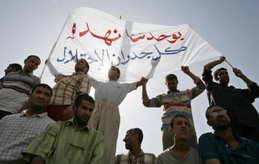
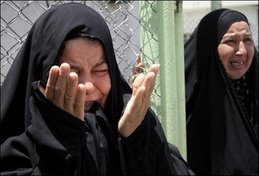
Iraq: Kurdistan Regional Government must rein in armed political party militias and investigate killings during protests
View report in English
https://www.amnesty.org/en/documents/mde14/2711/2015/en/
Posted by
IWS
at
9:15 PM
Labels: HR articles, HR/ Humanitrian Reports, kurdistan
«كرد - إسرائيل»، هو إسم المجلة الثقافية الشاملة التي ظهرت فجأة ومن دون سابق إنذار في محال بيع الصحف في إربيل عاصمة إقليم كردستان العراق. يبدو الأمر غريباً وعصياً على الفهم في إقليم طالما حاول بكل جهد ممكن أن يرمي عن كاهله تهمة العلاقة مع إسرائيل.
تظهر الصحف والمجلات عادة لتعكس رأي شريحة من الناس أو تستجيب مطامحهم وتعكس آراءهم وتعبر عن تطلعاتهم. المجلة الجديدة تدعو إلى إقامة علاقات مع إسرائيل، فهل ثمة في الأوساط الكردية من يشكل لهم هذا الأمر حاجة ملحّة بحيث يتطلب الأمر إصدار مجلة تنطق باسمهم؟
يفصح أصحاب المجلة، التي أخذت رخصة إصدارها من حكومة إقليم كردستان، عن علاقتهم بإسرائيل وهم عمدوا إلى إجراء مقابلة مع وزيرة الخارجية الإسرائيلية السابقة تسيبي ليفني. مثل هذا الأمر يعزز الاتهامات التي عادة ما تشير إلى العلاقة التي تربط الأكراد بإسرائيل، وهي اتهامات يرفضها المسؤولون الأكراد بشدة.
يبدو الأمر مثل لعبة سمجة لا غاية محددة لها. ماذا يريد أصحاب المجلة بالفعل؟ ما هي الغاية من إصدارها؟ إذا كان الأمر يتعلق بإظهار التعاطف مع اليهود (أو حتى مع دولة إسرائيل)، فهل يحتاج الأمر إلى إصدار مجلة؟
الى أي قارئ تتوجه المجلة التي تصدر باللغة الكردية؟ هل أصبحت العلاقة مع إسرائيل من الحاجات الأساسية للمواطن الكردي؟
لماذا يعتقد أصحاب المجلة أن القارئ الكردي بحاجة إلى مجلة تكون جسراً بين الكرد واليهود، أو الكرد وإسرائيل، دون كل شعوب الشرق الأوسط؟ أليس الأجدر بالاهتمام المبادرة إلى تعزيز الروابط والفهم المتبادل بين الكرد وجيرانهم الأقربين من العرب والترك والفرس، الذين تربطهم بالكرد روابط الجغرافيا والتاريخ والثقافة؟
هل من المفيد حقاً ان تكون هنالك علاقة بين الكرد واسرائيل؟ أي فائدة سيجنيها الأكراد من علاقة كهذه في محيط يقف لهم بالمرصاد إزاء كل حركة يقومون بها، ويحسب عليهم كل شاردة وواردة ويبدي حساسية مفرطة من كل ما له علاقة بإسرائيل؟
هل وصلت حرية التعبير في إقليم كردستان إلى مرحلة يستطيع فيها من يشاء أن يقول ما يشاء ويصدر من الكتب والمجلات ما شاء من دون أن يحاسبه أحد؟ الجواب هو كلا بالطبع. الحال أن الرقابة الكردية تلاحق الكتاب والصحافيين وتحاسبهم على أدنى التفاصيل في ما ينشرون. وقد تعرض الكثير من هؤلاء للاعتقال والملاحقة لأسباب لها علاقة بنشر أشياء اعتبرتها السلطات الكردية مضرة بالمجتمع. وأقــــام الزعماء الأكراد دعاوى قضائية على صحافيين أجانب نشروا تقارير صحافيــــة عن ثرواتهم وسيطرة عائلاتهم على مراكز السلطة والمال في الإقليم.
صدرت مجلة «كرد - إسرائيل» في شكل عادي ولم تواجه أي رد فعل سلبي لدى الحكومة المحلية. وقال نقيب الصحافيين في الإقليم فرهاد عوني إن صدور هذه المجلة «مرتكز على قانون العمل الصحافي الرقم 35 لسنة 2007 الصادر عن برلمان إقليم كردستان وينص على انه في استطاعة أي مواطن الحصول على رقم الاعتماد في نقابة صحافيي كردستان وإصدار جريدة أو مجلة خلال 24 ساعة على ألا يتعارض مع المنطلقات العامة لحرية صحافة كردستان».
وعلى ما يبدو، فإن «المنطلقات العامة لحرية صحافة كردستان» لا تواجه مشكلة في أن تتعارض مع المنطلقات السياسية لدولة العراق التي يعتبر الإقليم جزءاً منها، كما أنها لا تجد مشكلة في أن تتعارض مع الرأي العام العراقي والعربي والإسلامي في عموم القول. فليس خافياً أن المحيط العام الذي يجد الأكراد أنفسهم فيه، لا يستسيغ أي احتكاك ثقافي أو سياسي مع دولة إسرائيل، فدع عنك إقامة علاقات معها.
صحيح أن الأكراد بحاجة إلى مد جسور مع كل شعوب المنطقة، غير أن الأولوية ينبغي أن تكون للشعوب التي يتقاسم الأكراد العيش معها من العرب والترك والفرس. وإذا كان لا بد من إصدار مجلة، أو صحيفة أو إنشاء محطة تلفزيونية، فالأحرى الشروع بمخاطبة هؤلاء قبل كل شيء.
لا أعرف رأي الجمهور الكردي بهذه المجلة ولا أعرف كم شخصاً سيشتريها ويقـــرأها، غير أنني على قناعة بأن الدعوة إلى علاقــــات بين الإقليم الكردي وإسرائيل هي آخر هموم المواطن الكردي. ما يقلق هذا المواطن ليس غيــــاب العلاقة الكردية - الإسرائيلية، بل غياب تفهم الرأي العام العربي والتركي والفـــارسي لطموحاته الساعية الى امتلاك شخصيته القومية الحرة بحيث يكون من حقه، أسوة بالجميع، أن يطور ثقافته ولغته بحرّية ومن دون قمع أو بطش.
ليست ثمة مؤامرة بالطبع في إصدار المجلة. المؤامرات عادة ما تكون سرية وغامضة، فيما المجلة علنية ومكشوفة للجميع. وهي تفصح عن توجهها إلى الملأ. إن كانت ثمة مؤامرة في الأمر فهي مؤامرة على الذات، وذلك من خلال الإمعان في تنفير الرأي العام العربي والإسلامي والعمل على تعزيز الصورة الشائعـــة عــــن الأكراد باعتبارهم «عملاء» للصهيونية والإمبريالية وما شابه ذلك.
يتعلق الأمر بسذاجة فقيرة مثيرة للشفقة. سذاجة تتذاكى وهي تمعن في صنع الأعداء من دون أي سبب. هي السذاجة التي تدفع صاحبها إلى الظهور في مظهر القوي الذي يلعب مع الأقوياء وهذه ممارسة لم تجلب للأكراد سوى الكوارث. وسبق أن سار أكراد العراق في هذا المركب وكادوا أن يغرقوا فيه. كان الزعماء الأكراد حاولوا إقامة علاقات مع إسرائيل فلم يحصدوا سوى الخيبة والنكسات وجرّوا على أنفسهم وعلى الشعب الكردي إجراءات انتقامية جهنمية قامت بها حكومة صدام حسين وصلت إلى مشارف الإبادة الكاملة. وعلى ما يبدو، فإن هناك من لا يتعلم من دروس التاريخ ويفضل الركض وراء الألاعيب العابرة التي لا تأبه لتبعات السلوك الفضائحي السافر.
إصدار مجلة في إقليم كردستان العراق تحتفل بالعلاقة الكردية - الإسرائيلية أمر يدعو إلى الحيرة. هناك من يلعب بالمصير الكردي الذي تحيط به الأخطار من كل جانب، بقدر كبير من اللامبالاة وعدم المسؤولية.
لكل شيء في عالم السياسية ثمنه. للحكمة والرصانة ثمن وللسذاجة والطيش ثمن. والمؤسف أن المواطنين الأكراد هم من يدفعون ثمن سذاجة سياسييهم على الدوام.
Posted by
IWS
at
12:52 PM
Labels: colonialists, kurdistan
Monday, June 14, 2010 - 10:14 AMAn unprecedented wave of mass protests over declining freedom of speech has engulfed Iraqi Kurdistan over the last few weeks. The protests were sparked by the recent, mysterious death of the young Kurdish journalist Sardasht Osman, a 23-year-old student who had written in local publications and a Europe-based Kurdish website that are critical of the Kurdistan Regional Government (KRG) and both of its two parties -- the Kurdistan Democratic Party (KDP) and the Patriotic Union of Kurdistan (PUK). Osman -- whose tortured body was found in Mosul -- had written fiercely critical essays about the region's ruling parties and their leaders. Although his death is the only such incident in the past several years for journalists in the Kurdistan region, many journalists now fear for their lives.
The trend toward infringements on the freedom of the press has been alarming. The Kurdistan Syndicate of Journalists documented more than 300 violations -- i.e., physical attacks, lawsuits, and threats -- against journalists in Kurdistan last year. Kurdish security forces and officials have been behind numerous assaults and lawsuits. The worrying trend flies in the face of habitual claims by Kurdish leaders who promote Kurdistan as a beacon of democracy in the Middle East and an oasis of safety in an otherwise violence-stricken Iraq.
For many in Kurdistan and abroad, Osman's death is not the only problem, but a symbol of the decreasing tolerance in Kurdistan for speech and press freedoms. Despite numerous attacks on journalists in recent months, not a single perpetrator has been brought to justice. The situation appears to have further deteriorated since the emergence of local opposition groups during Kurdish parliamentary elections in July 2009. Attempts by the main opposition party, Change, to ride atop the wave of public resentment toward the incident almost led to a political crisis with the KDP. The two parties have launched a media war against each other in a bid to vilify and demonize the other side. The unbecoming language used is often reminiscent of the dark era of the Kurdish civil war in the 1990s.
Osman's death remains unsolved, but the interpretation of the murder is now a matter of perception in Kurdistan. The reality is that many, albeit with no hard evidence, suspect the involvement of local authorities, especially from the KDP. The KDP is in charge of the security of the Kurdish capital, Irbil, where Osman was abducted. The KRG and KDP authorities are now in the process of what they have pledged to be a serious investigation. Through transparency and professionalism, Kurdistan's authorities must use the investigation over Osman's death as an opportunity to restore trust with the public and demonstrate serious commitment to protect the lives and dignity of journalists. To remove any suspicion on the whole of the government system, they must also do their utmost to bring the murderers to justice.
The problem has received growing international attention. Reporters Without Borders issued a statement last month to draw attention to the declining conditions for Kurdish journalists. The KDP and PUK seem "to have reached an agreement to muzzle the press and restrict the freedom of journalists as much as possible." They also reported that about a dozen Kurdish journalists were attacked by security forces and officials' bodyguards while covering events last April.
The United States has expressed concern over such violations in Kurdistan and across Iraq. To many in Iraq, it does not seem like the U.S. has made improving human rights and freedoms across Iraq a top priority. As the U.S. prepares to leave Iraq, it should place as much emphasis on democracy and human rights as it does on security, as it has been the main international protector of Kurdish self-rule since its inception in 1991. Of paramount importance is practical commitment to a press law passed by the Kurdish parliament in 2008. While the law -- highly progressive by regional standards -- is to be the basis of dealing with the media, courts and government officials still circumvent its provisions and many a times continue to try journalists according to the repressive laws of Saddam Hussein's era.
Iraqi Kurdistan remains a half-full, half-empty success story. In order to prevent any further damage, the U.S. should play its part in assisting Kurdish civil society and use its leverage to push Kurdish leaders to take more serious steps toward democratization and respect for human rights and liberties. Under the previous regimes in Iraq, the Kurds suffered the grossest forms of human rights atrocities and violations of their basic freedoms. The link between freedom of speech and democracy is a no-brainer. Thomas Jefferson once said he preferred a press without government to a government without press. Kurdish authorities, who claim both democratic and revolutionary legitimacy, should in no way attempt to limit freedom of speech and must take serious steps to protect these fundamental freedoms of their people.
Mohammed A. Salih is an Iraqi Kurdish journalist who has written for the Inter Press Service news agency, the Nation, and BBC News website.
Posted by
IWS
at
10:41 AM
Labels: journalists, kurdistan
Posted by
IWS
at
9:37 AM
Labels: kurdistan, oil and economy
Posted by
IWS
at
2:54 PM
Labels: corruption, journalists, kurdistan
Posted by
IWS
at
11:38 AM
Labels: journalists, kurdistan
Posted by
IWS
at
11:30 AM
Labels: journalists, kurdistan
Posted by
IWS
at
4:02 PM
Labels: HR/ Humanitrian Reports, kurdistan, pressrelease
14 April 2009
Security forces in Iraq's autonomous Kurdistan Region operate outside the rule of law and regularly abuse their authority, according to a new Amnesty International report.During a fact-finding mission to the Kurdistan Region in 2008, Amnesty International researchers found many cases of people arrested and arbitrarily detained by Asayish (security) officials, including some who were tortured and others who were forcibly disappeared and whose fate and whereabouts remain unknown. Torture methods include electric shocks to different parts of the body; beatings with fists, cables and metal or wooden batons; suspension by the wrists or ankles; beating on the soles of the feet (falaqa); sleep deprivation and kicking.Amnesty International has called on the Kurdistan Regional Government (KRG) to hold those responsible for human rights violations to account."The Kurdistan Region has been spared the bloodletting and violence that continues to wrack the rest of Iraq and the KRG has made some important human rights advances," said Malcolm Smart, Director of the Middle East and North Africa Programme. "Yet real problems - arbitrary detention and torture, attacks on journalists and freedom of expression, and violence against women - remain and need urgently to be addressed by the government."Hundreds of detainees who were held without charge or trial for several years have now been released but the authorities have failed to significantly curb the powers of the Asayish. They have also failed to rein in the Parastin and the Dezgay Zanyari, the security arms of the two main Kurdish political parties - the Kurdistan Democratic Party (KDP) and the Patriotic Union of Kurdistan (PUK) - which jointly comprise the KRG. "The KRG must take concrete steps to rein in these forces and make them fully accountable under the law if recent human rights gains are to prove effective," said Malcolm Smart. "The authorities must do more to uphold media freedom and redouble their efforts to overcome discrimination and violence against women, and end the vicious cycle of so-called honour killings and other attacks on women by men who wish to subordinate them."Amnesty International's report cites several cases of women who were murdered by male relatives in 2008. These include Cilan Muhammad Amin, 23, who was strangled to death, apparently by her brother, because of her suspected relationship with another man.Another woman, Kowan Yunis Qadir, aged 17, was shot dead after she sought a divorce from her husband. In other cases, women and girls are reported to have committed suicide because of violence, or the threat of it, from their male relatives, including 13-year-old Rojan, who burnt herself to death in March 2008 to escape forcible marriage to an adult man."Such cases show how much more still needs to be done by the KRG authorities to give women and girls effective protection against violence from those who wish to control their behaviour or force them into marriages against their will," said Malcolm Smart. "No effort should be spared to prosecute and imprison those who commit violence against women, and to make clear that those who perpetrate these crimes cannot escape justice.
Iraq: Hope and fear: Human rights in the Kurdistan region of Iraq
Download:
PDFIndex Number: MDE 14/006/2009Date Published: 14 April 2009
This report details a wide range of human rights violations committed in the Kurdistan Region of Iraq in recent years. In particular, it sheds light on violations such as arbitrary and prolonged detention without charge or trial, enforced disappearance, torture and other ill-treatment, the death penalty, unfair trials, discrimination and violence against women, and attacks on freedom of expression. It includes case studies to illustrate these abuses and numerous recommendations towards reducing such violations.
Posted by
IWS
at
4:46 PM
Labels: HR/ Humanitrian Reports, kurdistan
Posted by
IWS
at
3:13 AM
Labels: kurdistan, oil and economy, Political Analysis
Prof. Kamal Majid, July 2008.
When dealing with Northern Iraq, the western media often impress the public opinion in two ways: first, they stress that the Kurds are different from the rest of Iraqis and indeed have suffered from the successive central governments in Baghdad. Second, they claim that since 1991, when the north western part effectively separated itself from the rest of the country, the Kurdish people there have had a wonderful and peaceful life. This paper refutes both these claims.
The July Revolution of 1958 brought the pro western monarchy to an end and cancelled the Baghdad pact (CENTO), thereby closed the British military bases in Habania and Shueba. The newly established Kassem government invited Mustafa Barzani and his followers to return home from the Soviet Union, where they had fled after the failure of their 1946 rebellion against the Nuri Saeed government. The jubilant people of Iraq, both Arabs and Kurds, welcomed them back and the new government allocated Nuri Saeed’s house, in the present Green Zone, to Barzani’s family and gave him a cabinet minister’s salary. All his followers were given good jobs in various government departments, in a process in which I was directly involved. Several Kurdish ministers were also included in Kassem’s Cabinet.
Naturally NATO disapproved the idea of a united independent Iraq. According to Jalal Talabani, now the president of the pro American regime,
the Shah of Iran, a zealous Supporter of the west, appointed General Warham to isolate and topple Kassem, using Barzani and his tribe.(See Jalal Talabni, Al-Wasat, arabic journal, London, nos. 357 and 358, 1998.)
Once Kassem was killed in the 1963 coup, organised jointly by the Baath party and the Kurdish Democratic Party (KDP), then jointly led by both Barzani and Talabani, Israel and the west decided to use the Kurdish party to continuously destabilise the successive Iraqi governments. According to Henry Kisinger, (See Years of Renewal, Phoenix Press, London, 1999, pages 584 to 592) between 1972 and 1975 alone the US government spent some $23M on the anti-Iraqi Barzani rebellion while Israel supplied weapons worth $28M. During the same years the US Senator Otis Pike stated that 35000 Kurds were killed and some 200 000 of them ended as refugees.( See the Guardian on 20/10/1990)
In 1964, in a power struggle, Talabani and a number of the leaders of KDP went against Barzani and his tribal followers. This initiated a bloody war between the two factions in which tens of thousands of Kurds have been killed. This war ended in September 1998, i.e. 34 years later, but both factions still keep their separate armies as explained below.
After the war in Kuwait, in which both Barzani’s KDP and Talabani’s Patriotic Union of Kurdistan (PUK) sided with the west, Baghdad government lost total control of best part of the Kurdish north west and a provincial government was formed there with Arbil as its administrative centre. An election was held in May 1992 but within three days Massud Barzani, the now leader of KDP, issued a statement, on 22/5/1992, in which he admitted to wholesale election fraud. Disregarding the results, he decided to agree with Talabani to form a joint parliament and government. Both parties were represented equally, with non-elected members appointed by each leader taking 50% of the seats and the portfolios.
Within less than four months the newly formed Arbil administration agreed with the Turkish government to attack the Kurds of Turkey. On 7/10/1992, Pam O’Toole reported in the Guardian that KDP forces have joined the Turkish government army in order to fight the Turkish PKK elements who have taken refuge in the Iraqi mountains.
The worst news, however, came when on May the 1st. 1994 the Peshmargas belonging to KDP and PUK clashed. The war between these forces continued until September 1998 and became particularly fierce after August the 31st, 1996 when Saddam Hussein’s army occupied Arbil in order to expel Talabani and his PUK forces and hand the city to Massud Barzani and his KDP. The two parties succeeded in killing more than ten thousand kurds. The fierceness of the atrocities was recorded by Amnesty International in its report no. MDE14/WU01/94 on 1l/6/1994 which stressed that both parties not only killed prisoners but tortured them and tore their dead bodies to pieces. The Bush administration should feel ashamed for being allied to criminals such as Barzani and Talabani.
The Arbil administration
( a ) – The Economy:
Before and during the Kuwait war President George Bush Senior made several statements inciting the Iraqis against the central government. When the people rose, on the 2nd.of March, 1991 the supporters of both the Kurdish parties managed to expel the Iraqi forces out of northwest Iraq and temporarily captured the oil city of Kirkuk. This was followed by a prolong lawlessness in which government as well as private property was pillaged. As late as 13th of September 1992 Chris Hedgers reported from Arbil, in the International Herald Tribune, page 6, explaining that ‘’ the Kurdish Government’’ is lumbered with chaos and has lost control of the countryside. There the local peshmargas are acting independently, ‘’confiscating vehicles and machinery in order to sell them in Iran.’’ As an example he said that ‘’out of 700 vehicles belonging to Arbil municipality’’ before the takeover of the city ‘’only 92 are left and most of these are out of action.’’ He pointed out that the police force in the city had lost two third of its members and ‘’out of 345 vehicles it is left with only 18.’’
The UK/US forces never bombed the power stations in the Kurdish part of the country. The fact that the people there have no electricity is because thieves took vital parts of turbines and hydro electric generators as well as miles of copper cables and sold them in Iran. The remaining generating equipments in both Dookan and Darbandykhan dams as well as the numerous substations have been out of service for nearly two decades and are obsolete. To rectify the electricity grids in that part of the country is going to take years and many millions of dollars.
The water supply pipes and pumps are old and rusted to the extent that the primitive sewerage system, if available, often contaminates the drinking water. In many cities and towns drinking water is brought in tankers. Other infrastructures are precarious and often don’t exist. This is especially the case in the villages.
Smuggling became the main source of income for the administration. Throughout the 13 years of Sanction Massud Barzani was collecting more than a million dollars a day by allowing hundreds of Turkish Lorries to pass through Ibraheem Khalil Bridge to deliver all sorts of goods to Baghdad This daily illegal business was being conducted with full knowledge of the UN and the US/UK forces controlling the area.
An equally profitable smuggling was that of cigarettes. From the city of Dahok, on 18/8/1994, Chris Hedgers reported in the New York Times and the Guardian that the Kurdish safe heaven has become ‘’a major black market for smuggling’’ duty free American cigarettes, such as Kent, Marlborough and Victory ‘’worth millions of dollars.’’ Dahok, then Massud Barzan’s headquarter, became, and still remains, the distribution centre for all sorts of other goods to Iran, Turkey, Syria and the Arabic parts of Iraq.
After the occupation of Iraq, in 2003, extensive looting took place in the cities of Baghdad, Mosul, Kirkuk, Tikrit, and Baquba and many other towns. Thieves emptied banks, Government offices and military bases. Special gangs of Kurds associated to both KDP and PUK drove away thousands of municipal buses and private cars. A new, extra rich class of people suddenly dominated the Kurdish comunity. Their past experience, during the Kuwait war, and permanent links to their counterparts in Iran and Turkey, helped them to establish routes of smuggling throughout the Middle East with links to ex- Soviet republics in central Asia. This highly profitable activity was conveniently extended to smuggling of tens of thousands of Kurdish and other economic refugees to Europe. With the help of the Kurdish film maker, Karzan Krekar, the BBC produced an excellent documentary on the subject.
After Iraq’s occupation in 2003, apart from the United Nations handouts in accordance with the ‘’Oil for food’’ programme, both Massud and Jalal’s parties became wealthy recipients of Iraq’s oil money transferred to them in cash by Paul Bremer. On 10/12/ 2004 the Financial Times (FT.com) reported that the KDP received $1.4 Billion, (Notice Billion not Million) which is being invested for Barzani in international banks by a company established by Ed Rogers and other associates of President George Bush. Further enquiry, through DR. Mahmood Othman, who is a Kurdis MP in Baghdad, revealed that President Talabani had received an equivalent amount.
The Kurdish administration, virtually independant since 1992, has never produced a budget. In spite of the unification of the two administrations of Arbil and Sulaimania there are still two finance ministers, one for each party. Neither has imposed any tax on the people they administer. Apart from smuggling they receive whatever Barzani and Talabani give them. The 17% oil money, annually received from Baghdad, goes directly to the two ruling parties.
The majority of the government officials occupy artificially created posts. In Sulaimania alone there are also 18000 members of PUK who earn their living as party officials. It is claimed that the police force has some 400 thousand members.
Wages in the private sector are extremely low and this is the main reason for the Kurdish youth to leave the country with the hope of settling in one of the European countries. The number of Kurdish men who have left for Europe is claimed to have reduced the ratio of men to women by 9%. On the other hand workers from Bangladesh, the Far East as well as some 30 000 Arabs from the troubled south of Iraq carry out menial tasks and engage in begging.
The Kurdish part of Iraq was famous for tobacco farming, producing some 15 000 tons a year; with the government in Baghdad being the farmer’s only customer. Because of cheap smuggled American cigarette the tobacco farming has stopped. So have the cigarette factories in Sulaimania and Arbil.
There were also Sugar factories which used beetroot grown locally. Because most farming has stopped, these factories were also dismantled and sold in Iran, together with one or two other textile factories. The garment tailoring factory went on producing cloths until the PUK recently sold it to property developers to build a luxury housing estate. There are still two cement factories, the one in Sarchenar has been sold to Nokan, a PUK owned company. The other, in Taslooja, is owened by Talabani,s wife Hero, and her agent, Farouk Mala Mustafa. The latter also owns the Mobile telephone system and a number of luxury hotels.
Corruption was rife in the construction industry, especially in the tendering stage, when contracts were first offered to the relatives of the party leaders or influential members of the ruling parties, who then sold them repeatedly to other favoured bidders down the hierarchy. Most such contracts, however, have come to standstill because of the devaluation of the dollar and huge rises in material prices.
Because of the collapse of agriculture the villagers have moved to the main cities of Arbil, Sulaimania and Dahok. Food, including perishables, is imported from Iran, Syria, Turkey and the United States and sold at extortionate prices.
Lack of rain and the diversion of Sirwan River by Iran have reduced the water level in Darbandikhan reservoir. The water in this reservoir is claimed to have turned black and undrinkable. Lack of water in the rivers has also reduced farming drastically which in turn has forced the villagers to move to the cities. Local farmers were also bankrupted because the people were receiving free, UN handouts in accordance with the ‘’Oil for food’’ agreement.
Kirkuk is the main oil producing city in the north but there is an unpleasant disagreement among the Kurds, the Turkmen and the Arabs. There are also huge gas fields in the Kurdish areas of Taq taq, Chamahamal and Laylan. For topological reasons gas pipelines, like the existing oil pipes, have to be constructed through the Arabic planes west of the Tigris Rive before interring Turkey. This fact is likely to be a major factor for friction between the Arabs and the Kurds on the one hand and also between the Kurdish administration and Turkey.
At the moment the two ruling parties smuggle some forty tanker loads of crude oil a day through Iran to the Gulf.
The Kurdish administration has signed a number of contracts with international oil companies. However, Baghdad’s oil minister, Dr. Hussain Shahristani, in the BBC News, Hard talk programme, on 18/6/2008, declared them as ‘’illegal’’. This dispute of who is entitled to sign oil contracts is a major obstacle, preventing the ratification of the new oil legislation by the Green Zone parliament and could become the catalyst for a prolonged disagreement between the Arab and the Kurdish members of the fragile Baghdad government.
The gap between the rich and the poor is widened and created acute social problems including prostitution. This latter activity is the source of widespread ‘’ honour killing.’’ The main social change in the cities, however, is the domination of village mentality, which has suffocated the intellectual life and given rise to a flood of religious fervour. Cities come to a near standstill at prayer times when masses of worshipers walk to the mosques for prayer.
(b) – Politics:-
Massud Barzani, the leader of the Kurdistan Democratic Party (KDP) and Jalal Talabani, the leader of the Patriotic Union of Kurdistan (PUK) were never elected by the Kurdish people for any position or post whatsoever. The leadership of KDP is hereditary. When Mustafa Barzani died his son Idrees automatically became the leader of the party. When he died his brother, Massud, took the leadership. On the other hand Jalal was elected as the PUK leader by a handful of people when the party was formed in 1975. Since then no party leadership election has taken place.
Since 1991 three elections have taken place in the area under their control, one for the Baghdad parliament and two for Arbil’s. Neither men were nominated for membership but they selected all the representatives of their respective parties to these assemblies. What is worse is that they have the right to sack any disobedient member before his term is over.
On 21/9/1996 Jalal Talabani, referring to the then defunct Arbil parliament, stated, in London, Al Hayat newspaper: ‘’ The parliament was established on the bases that each party has half the seats; the election did not take place on constituency bases, people voted for the parties, not for named candidates and each party has the right to replace its members by others.’’
Dr. Mahmood Othman, himself a member of Baghdad parliament, went further. He stressed to me that during the election the two Kurdish parties themselves supervised the ballot boxes. ‘’ Well they packed the boxes with their own ballot papers.’’ He said.
The members, in Arbil parliament, rubberstamp the leader’s decisions only. So much so the Kurdish newspaper, Hawlati, reported, on 16/6/2008, a statement by Susan Shahab, herself a PUK member of the parliament, suggesting that ‘’ Parliament should be cancelled altogether because it is defunct.’’
The animosity between the two ruling parties has not been resolved. This is why Arbil administration has two separate ministers for Peshmarga, one for each party. The commanders of each peshmarga receive their orders from their party leader, not from the head of the administration.
Skirmishes still take place between the two parties. On 29/6/2008 Hawlati, no. 434, reported the disappearance, on 13/5/2000, of the PUK member Kareem Ahmed and three of his sons because they were suspected of secretly working for KDP. Up till now nobody knows their whereabout.
The two parties have lost the support of the people. Indeed, lack of jobs, water, electricity and petrol have all caused discontent among the masses and several anti government demonstrations have taken place in Sulaimania, Kirkuk, Kalar and Akra where Kurdish police have attacked and killed at least six demonstrators. Yet apart from the revival of Islamic trends and the growth of the Islamic League no serious secular political group has been identified.
The most alarming development is the resumption of the two ruling parties to train military units of the Turkish PKK and its sister Iranian party, Pzhak, in order to carry out attacks on both countries. This state of affairs can lead to full scale war because on 29/6/2008 President Bush obtained the approval of the US congress to spend $400 million on Iran’s opposition groups in an effort to dismember that country. No sooner than this news was announced, the Iranian terrorist, Mujahedeeni Khalq, supporters in Paris demonstrated demanding that the European Union removed the organisation from its list of terrorist groups.
In answer to Pzhak’s military attacks, Iranian artillery bombards its bases in Rania, Kaladeza, Kandeel, and other Kurdish towns and villages in Iraq.
( c ) - Conclution;
The Kurdish people living in the region have lost faith in the ruling Kurdish parties and indeed in parliamentary elections. They are living under difficult economic and political conditions. However, they are unorganised and are unlikely to cause serious problems for the Arbil administration. Instead they are making every effort to seek better living elsewhere and preferably in Europe. The risk the two parties are taking in offering military training to dissident Turkish and Iranian groups can backfire and lead to full scale fighting, that is if the US government decides to heat up the cold war against Iran.
Posted by
IWS
at
8:50 AM
Labels: kurdistan, Political Analysis
Posted by
IWS
at
12:23 PM
Labels: deportations, kurdistan
Protest the suffering of Iraqi Christians: No to terrorism No to state terrorism.Hands off our minorities. Hands off our people. Shame on the human rights violators on all sides. Assemble 11:30 on 28/7/14 near Parliament Square, near Westminister tube station London. For more past events click here
-----------------------------------------------------------------------------------------
We women of Tadhamun condemn the persisting practice of arbitrary arrests by the Iraqi security forces. We condemn their arrests of women in lieu of their men folk. These are 'inherited' practices. We are alarmed by credible media reports of the Green Zone government’s intentions of executing hundreds of Iraqi men and women.
المقالات المنشورة على هذا الموقع لا تعكس بالضرورة آراء منظمتنا أو أعضاء منظمتنا
تسجيل ندوة مناضلات ينتصرن للحياة
I am in love with Massoud Barzani's daughter A poem that kills. By Sardasht Osman
I am in love with the daughter of [Iraqi Kurdistan president] Massoud Barzani, the man who appears here and there and claims he is my president. I would like him to be my father-in-law and also I would like to be a brother-in-law with [former Prime Minister] Nechirvan Barzani*.
If I become Massoud Barzani?s son-in-law, we would spend our honeymoon in Paris and also we would visit our uncle?s mansion in America. I would move my house from one of the poorest areas in Erbil to Sari Rash [Barzani?s palace complex] where it would be protected by American guard dogs and Israeli bodyguards.
I would make my father become the Minister of Peshmerga [the Kurdish militia]. He had been Peshmarga in September revolution, but he now has no pension because he is no longer a member of Kurdistan Democratic Party.
I would make my unlucky baby brother, who recently finished university but is now unemployed and looking to leave Kurdistan, chief of my special forces.
My sister who has been too embarrassed to go to the bazaar to shop, could drive all the expensive cars just as Barzani?s daughters do. For my mother, who is diabetic and has high blood pressure and heart problems but who is not able to afford treatment outside Kurdistan, I would hire a couple Italian doctors to treat her in the comfort of her own house.
For my uncles, I would open few offices and departments and they, along with all my nieces and nephews would become high generals, officers, and commanders.
All my friends said Saro, let it go and give it up for otherwise you will get yourself killed. The family of Mulla Mustafa Barzani [Massoud Barzani's father] can kill anyone they want, and they surely will.
I told them I did not commit blasphemy and I swear to the dagger of [Massoud's late brother] Mustafa Idris Barzani that my father had spent 3 nights with him on the same mountain [during the fight against Saddam] and so why not say those things? Massoud Barzani claimed himself that he is a president,www.ekurd.netand I would ask him how may time has he visited Erbil and Sulaimaniyah in the last 18 years?
My problem is this man, Massoud Barzani, is so tribal that so arrogant that he does not recognize anybody from even the other side of Sari Rash. With a few clicks, I can out more about any leaders? wives in the world but I have no idea who my mother-in-law would be and what she looks like.
I have no idea who I should take with me to ask Massoud Barzani to give me his blessing to marry his daughter. From the beginning, I thought I should take with me few religious figures, some respectful old men and some old peshmerga, but one of my journalist friends told me that I should find some Saddam collaborators and those who participated in the Anfal operation [ethnic cleansing in the late 1980s] with Saddam because they are all around Massoud now and he likes them. Another friend suggested that I should go to one of news conference of Nechirvan Barzani and make friends with him and ask him to do me a favor. However, if he doesn?t help, then I can ask Dashne [a Kurdish singer] because she meets them frequently and might help out.